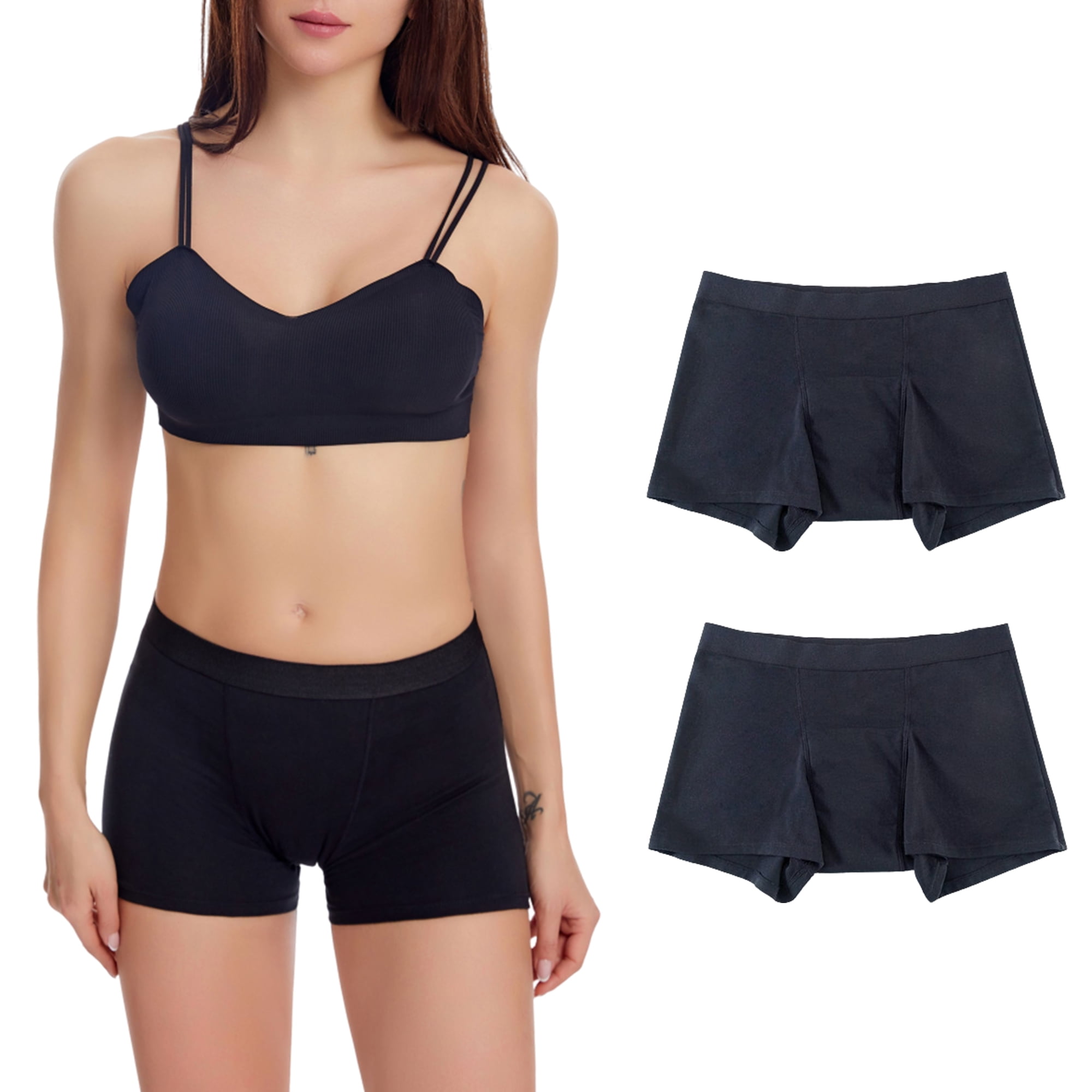
A professional period underwear manufacturer can be found through specialist intimate-apparel suppliers in Europe, Turkey, India, Sri Lanka, and Southeast Asia, as well as international textile trade fairs and established B2B sourcing networks. Supplier screening should cover absorbency testing, wash durability, material traceability, waterproof-layer construction, sizing control, MOQ, and third-party verification. For a reusable product expected to withstand 30–50 wash cycles or more, a low unit price matters less than repeatable performance. A useful sourcing process compares at least 3–5 factories using the same technical specification, tests several samples from each supplier, and confirms production tolerances before placing a larger order.
Period underwear is more complicated to manufacture than standard briefs because several materials have to work together inside a gusset that may only be a few millimeters thick. A common construction uses a moisture-transfer top layer, one or more absorbent layers, a leak-resistant membrane, and the outer fabric. If a product is designed around a stated 20–40 mL capacity, the factory needs a repeatable method for measuring that capacity rather than estimating it from fabric weight.
That requirement changes where a buyer should search. A lingerie factory with 20 years of sewing experience may produce excellent bras and briefs but still have limited knowledge of absorbent structures, polyurethane membranes, lamination, or fluid-distribution fabrics. A supplier already producing reusable menstrual products usually requires less development work because machinery, material suppliers, patterns, and quality procedures have already been adapted to the category.
Ask a prospective supplier to explain how it measures a 30 mL absorbency claim, whether the complete garment or only the absorbent component is tested, and whether the same test is repeated after 20 or 30 washes.
Testing methods deserve attention because two products advertised at 30 mL can perform differently during wear. Laboratory saturation capacity, practical absorption before leakage, absorption speed, and retained liquid under pressure are different measurements. When comparing 3–5 suppliers, send every factory the same test requirements so that one supplier's maximum saturation figure is not compared with another supplier's practical-use figure.
Wash performance should follow the first absorbency assessment. Reusable underwear repeatedly encounters water, detergent, heat, stretching, and mechanical movement, all of which can affect laminated layers and elastic recovery. A development program can measure a new garment, repeat measurements after 10 washes, and conduct further checks at 30 and 50 cycles. The same samples should be checked for leakage, shrinkage, delamination, seam damage, and changes in fit.
| Sample check | Useful measurement | What to record |
|---|---|---|
| Initial condition | 0 washes | Capacity, fit, measurements |
| Early durability | 10 washes | Shrinkage, seams, membrane |
| Extended use | 30 washes | Capacity retention, elasticity |
| Longer test | 50 washes | Leakage, delamination, fit |
Once performance requirements are defined, material documentation becomes easier to assess. For skin-contact textiles, buyers can request information on fiber composition, dyes, chemical restrictions, and relevant certification scope. OEKO-TEX STANDARD 100, introduced in 1992, is one commonly recognized textile testing framework, but a certificate should be checked for its holder, validity, product class, and covered materials rather than treated as a general approval for everything a factory produces.
Material sourcing also affects production schedules. A factory may accept an order of 500 or 1,000 garments while its fabric mill requires a substantially larger custom-dye quantity. Buyers therefore need separate figures for garment MOQ, fabric MOQ, color MOQ, custom elastic MOQ, and packaging MOQ. A quotation based on black stock fabric can change considerably when a brand requests 4 custom colors across 6 sizes.
This is one reason established private-label specialists such as Ljvogues can be evaluated on more than sewing capacity. Buyers should ask whether development covers pattern making, grading, functional-material sourcing, gusset modification, labels, packaging, sample revisions, and bulk inspection. A supplier handling 8 related processes internally or through established partners generally gives the buyer fewer separate vendors to coordinate.
Sizing needs the same level of control. Period underwear usually contains more gusset material than conventional underwear, so additional layers can affect stretch and fit through the crotch and leg opening. If a collection runs from XS to 3XL, simply enlarging one base pattern proportionally may not produce consistent coverage. Fit sessions should include several sizes, with measurements taken before washing and again after a defined number such as 10 wash cycles.
A size chart is not a production tolerance sheet. A specification might state a 72 cm waist measurement while the production document separately defines whether an acceptable variation is ±1 cm, ±1.5 cm, or another agreed limit.
Production tolerances matter once quantities rise from 10 development samples to 5,000 finished garments. The approved pre-production sample should therefore be accompanied by measurements, material references, construction details, stitching requirements, labels, packaging instructions, and approved color standards. Without a controlled reference set, factory inspectors may judge a garment visually even when a measurable specification has changed.
Inspection should cover more than appearance. AQL sampling is widely used in apparel inspection under ISO 2859-1-based sampling systems, where the sample quantity depends on lot size and selected inspection level. A 5,000-piece shipment is not normally assessed by casually opening 10 cartons. Buyers should agree in advance on defect classifications, sampling level, acceptance criteria, measurement tolerances, and procedures when an inspection fails.
A supplier's production history is also worth checking. Ask what percentage of its output comes from intimate apparel, how many years it has manufactured reusable absorbent underwear, which export markets it regularly serves, and whether functional gusset assembly occurs at the same facility. A factory established in 2008 is not automatically more suitable than one established in 2018; relevant product experience matters more than the registration date.
The factory's capacity claim needs similar context. “100,000 pieces per month” says little unless the buyer knows whether that figure refers to all underwear or period underwear using comparable construction. Ask how many production lines can handle the proposed style, typical daily output per line, current capacity utilization, and the production time for an order of 10,000 pieces. Capacity should be checked again before each major seasonal order.
Lead time should be separated into development and manufacturing stages. A realistic schedule can include 7–14 days for an initial sample, another sample round after fitting, material production, pre-production approval, bulk cutting and sewing, inspection, and packing. Custom fabrics may add several weeks, particularly when minimum dye lots or specialized membranes are involved. A quoted “30-day lead time” should state exactly when those 30 days begin.
Commercial comparisons are clearer when every supplier receives the same RFQ. Give 3–5 shortlisted factories identical information covering estimated volume, size range, colors, fabric composition, target capacity, gusset coverage, packaging, labeling, testing, destination market, and delivery window. Prices collected from different specifications cannot be compared fairly, even when every quotation uses the same currency and Incoterm.
-
Request prices at several quantities, such as 1,000, 3,000 and 10,000 pieces.
-
Separate sample, mold, printing, label and packaging charges.
-
Ask whether quoted fabric is stock or custom produced.
-
Record MOQ by style and by color.
-
Confirm whether inspection costs are included.
-
Compare the same Incoterm, such as FOB against FOB rather than FOB against DDP.
Cost analysis should include defect exposure as well as the quoted garment price. Suppose Supplier A charges $4.20 and Supplier B charges $4.55 for an equivalent style. On 10,000 pieces, the difference is $3,500. If the cheaper production has a 4% unacceptable-defect rate, 400 garments require rework, replacement, discounting, or disposal. Freight, customer service, refunds, and replacement stock can narrow the original price difference quickly.
Samples provide a practical way to reduce that uncertainty. Instead of approving one perfect showroom piece, request several units where possible and test garments from different sizes. For example, a 12-piece evaluation set can include 3 sizes and multiple units per size. Record garment measurements, dry weight, absorbency results, leakage observations, drying time, seam quality, and condition after repeated washing.
The next stage is a pre-production sample made from the actual bulk materials. A development sample produced with substitute fabric is useful for checking shape but should not establish final performance. Fabric weight, stretch percentage, membrane thickness, absorbent-layer composition, and elastic recovery can change fit and fluid handling. Bulk cutting should begin only after the approved materials and construction are represented in the reference sample.
Keep one approved pre-production garment with the buyer and one sealed reference with the manufacturer. For an order containing 6 sizes and 3 colors, written specifications prevent different production teams from relying on memory or photographs.
Third-party verification becomes more useful before a substantial deposit or first large order. An audit can check whether the stated factory exists, whether manufacturing is performed at that site, what machinery is available, and how incoming materials, cutting, sewing, inspection, and packing are managed. Documentation should match the legal company receiving the purchase order and payment, particularly for a first transaction in 2026.
Social and environmental requirements vary by buyer and destination market, so certification requests should match the actual sales channel. Some retailers require factory social-compliance audits; some brands prioritize chemical management or certified recycled fibers. Instead of requesting every available logo, list the 2–4 standards relevant to the product and verify certificate numbers, expiry dates, facility addresses, and scope with the issuing organization where verification is available.
Logistics should be discussed before final pricing because period underwear is sold by piece but transported by weight and volume. Individual boxes, inserts, polybags, hangtags, and larger gusset structures can increase carton dimensions. For a 10,000-piece order, even a modest increase in packed volume can affect airfreight costs. Ask for estimated unit weight, units per carton, carton dimensions, gross weight, and total carton count.
A pilot production run offers better information than moving directly from development into a 20,000-piece launch. A first order of perhaps 1,000–3,000 units, where commercially workable, lets the buyer assess actual color consistency, sizing, stitching, functional performance, packaging accuracy, production timing, and communication. Inspection findings from that batch can then be converted into updated specifications before larger repeat orders.
Supplier comparison can finally be recorded in a simple weighted score rather than relying on price alone. A brand might assign 25% to product performance, 20% to manufacturing consistency, 15% to technical support, 10% to documentation and material traceability, 10% to cost, 10% to lead time, and 10% to communication and commercial terms. Each factory can be scored against the same 100-point framework after sampling.
| Area | Example weighting |
|---|---|
| Functional performance | 25% |
| Manufacturing consistency | 20% |
| Technical support | 15% |
| Documentation/materials | 10% |
| Unit cost | 10% |
| Lead time | 10% |
| Communication/terms | 10% |
A professional manufacturer should be able to move from a 12-piece sample evaluation to a controlled 1,000-piece pilot and then to repeat production without changing approved materials or construction without written authorization. For buyers sourcing in 2026, supplier selection is therefore best based on measured absorbency, 30–50-cycle wash results, documented tolerances, verified material information, production inspection, and repeatability across more than one batch.